

FOR IMMEDIATE RELEASE: January 30, 2026
Press Release
Rutgers University’s Miller Center on Policing and Community Resilience and IACLEA Bring National Campus Safety Training Program to Tulane University
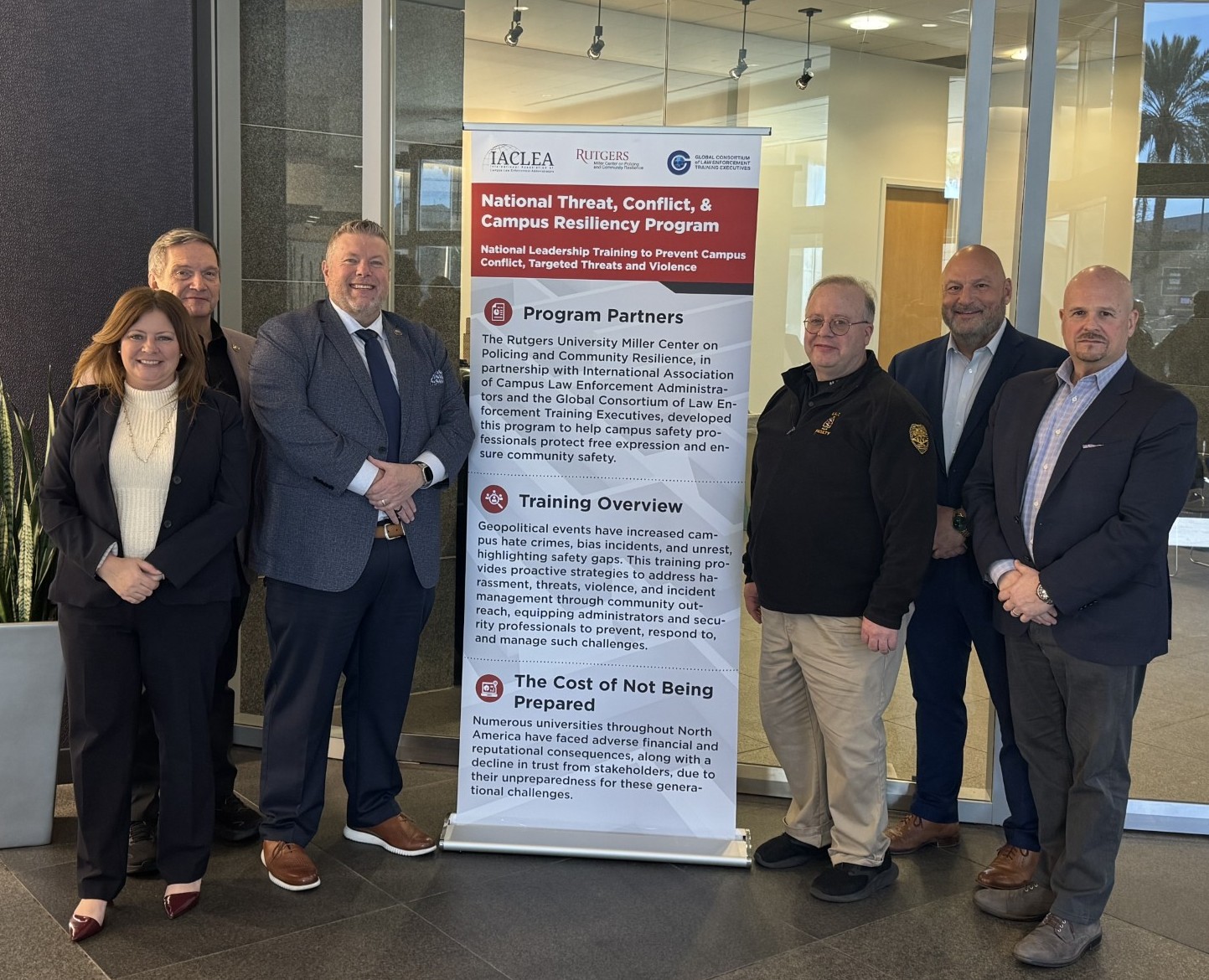
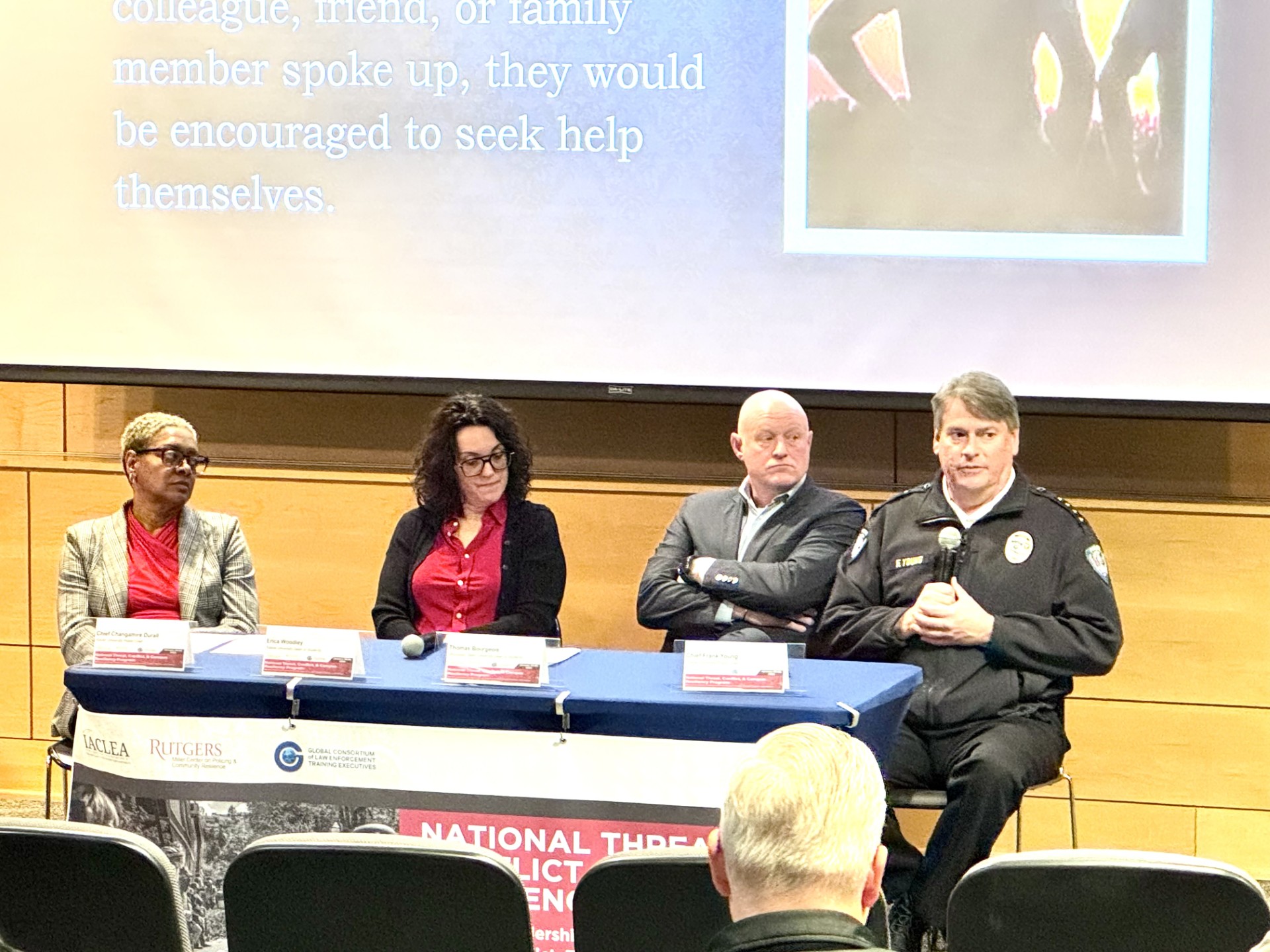
NEW ORLEANS, LA (Jan. 30, 2026)– Rutgers University’s Miller Center on Policing and Community Resilience hosted a two-day “National Threat and Campus Conflict Resiliency Program” (NTCC) training on Jan. 28-29 at Tulane University. The program convened senior campus safety leaders, law enforcement executives and higher education officials to confront the increasingly complex security environment facing American campuses, marked by protest-driven unrest, ideological extremism, targeted hate crimes, anti-Semitism and rapidly evolving public safety threats.
The NTCC Resiliency Program, developed by the Rutgers Miller Center in partnership with the International Association of Campus Law Enforcement Administrators (IACLEA), represents an innovative model for professional development in higher education policing. Built around real-world threat scenarios and executive-level decision-making, the program equips campus leaders to manage conflict, preserve free expression and protect community safety while operating within legally, politically and socially sensitive environments.
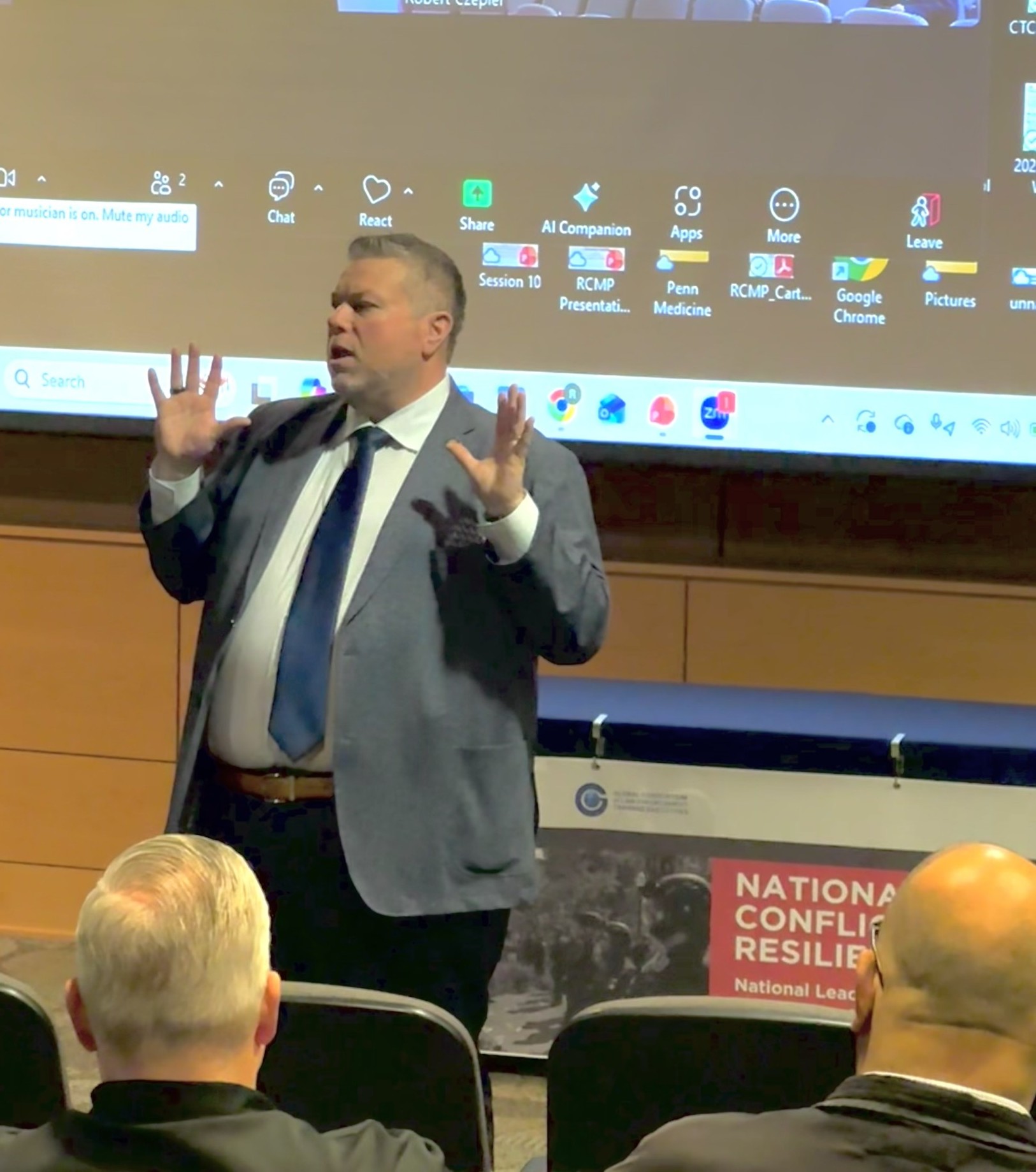
“What we are seeing on campuses today is not theoretical—it is fast-moving, emotionally charged and complex,” said Paul Goldenberg, deputy director of the Miller Center and nationally recognized expert in extremism, homeland security and policing. “This training is about equipping leaders with judgment, not just tactics. It helps campus safety executives identify emerging threats early on, protect constitutional rights and maintain trust during moments that can define an institution. Tulane demonstrated exactly the kind of leadership and seriousness this moment demands.”
“College campuses today are among the most contested and challenging environments law enforcement leaders face,” said Rob Kilfoyle, president of IACLEA. “Campus safety professionals are expected to make high-stakes decisions with little margin for error. This program gives leaders the opportunity to strengthen judgment, apply best practices and lead with clarity and restraint, supporting the core mission of IACLEA. The partnership with the Rutgers Miller Center reflects where campus policing must continue to go.”
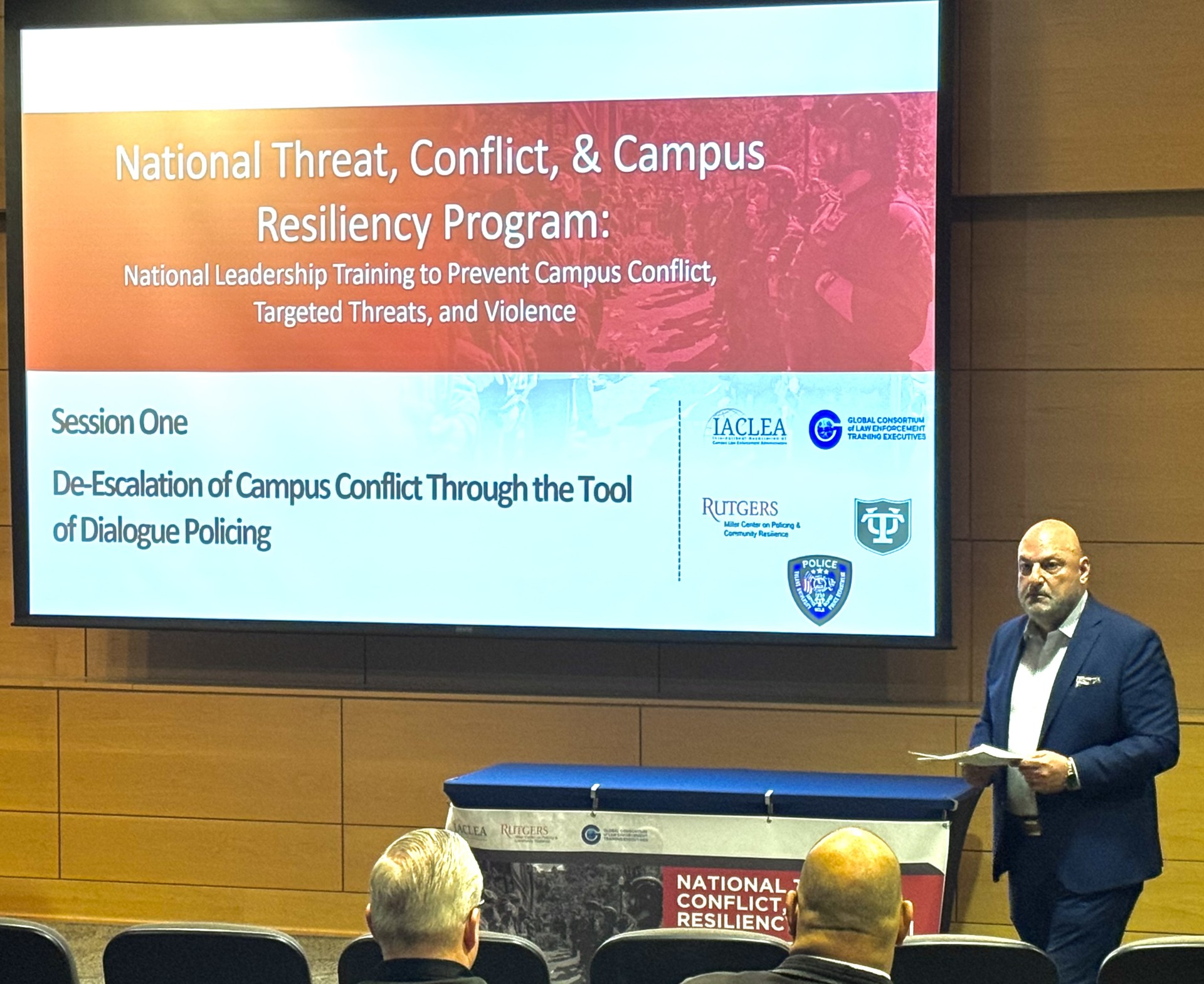
Distinguished presenters and federal partners contributed to the program’s multidisciplinary approach. Among the notable presenters was Emmy and Peabody Award-winning journalist Mark Albert, a partner in the firm Public Safety Media Strategies, who provided participants with a practical briefing on best practices for engaging with the media during crisis events. Jason Kepp led a separate session on the concept of “dialogue policing,” a proactive public safety approach
emphasizing early engagement, continuous communication and relationship-building between law enforcement and demonstrators to reduce tension, prevent escalation and support the lawful exercise of free expression.
Senior representatives from Louisiana’s local Federal Bureau of Investigation office delivered a dedicated session on indicators of radicalization and global extremism, offering participants insight into emerging threat patterns, behavioral warning signs and the relevance of global extremist movements within domestic campus environments.
Program sessions also focused on operational leadership, threat assessment, de-escalation strategies, lawful crowd management and sustaining institutional trust during periods of heightened tension. Attendees were provided a live demonstration of uncrewed aerial systems for campus public safety, delivered by subject matter experts from Draganfly. The demonstration reflected Draganfly’s role as IACLEA’s selected partner supporting the development of standardized, scalable drone programs for campus public safety agencies nationwide.
“Hosting this program reinforces Tulane University’s commitment to preparedness and community-centered public safety,” said Kirk Boules, Head of Public Safety at Tulane University. “Our goal is to ensure our teams are equipped to manage complex and evolving threats while protecting both free expression and campus safety.”
The Tulane program was made possible through a philanthropic donation to the Rutgers University Miller Center on Policing and Community Resilience, enabling the expansion of evidence-based leadership and resiliency programs for campus and public safety agencies nationwide. It marks the latest in a growing series of National Threat and Campus Conflict Resiliency Program trainings delivered across the United States, as Rutgers continues to support institutions navigating an increasingly challenging campus safety landscape.
###
About Rutgers University’s Miller Center on Policing and Community Resilience
The Miller Center on Policing and Community Resilience advances research, education and outreach focused on building stronger relationships between communities and public safety institutions. As part of Rutgers University’s dedication to service, innovation and justice, the center leads initiatives that promote accountability, trust and strategic resilience in policing and community safety.
About the Eagleton Institute of Politics
The Rutgers Miller Center on Policing and Community Resilience is a unit of the Eagleton Institute of Politics at Rutgers University-New Brunswick. The Eagleton Institute studies how American politics and government work and change, analyzes how democracy might improve and promotes political participation and civic engagement. The institute explores state and national politics through research, education and public service, linking the study of politics with its day-to-day practice.
About Rutgers University-New Brunswick
Rutgers University-New Brunswick is where Rutgers, The State University of New Jersey, began more than 250 years ago. Ranked among the world’s top 60 universities, Rutgers’s flagship university is a leading public research institution and a member of the prestigious Association of American Universities. It is home to internationally acclaimed faculty and has 12 degree-granting schools and a Division I Athletics program. It is the Big Ten Conference’s most diverse university. Through its community of teachers, scholars, artists, scientists and healers, Rutgers is equipped as never before to transform lives